
Why Roofing Manufacturers Rely on ACE Laboratories for CRRC Compliance Testing
As demand for energy-efficient roofing systems continues to grow, manufacturers face increasing pressure to provide independent, verifiable performance data.
Architects, engineers, consultants, and building owners are no longer satisfied with product claims alone—they want proof that roofing materials will deliver long-term thermal performance in real-world conditions.
At ACE Laboratories, we help roofing manufacturers generate the data they need to support CRRC certification, meet project requirements, and demonstrate the performance of their products with confidence.
Through specialized testing, accredited procedures, and deep expertise in roofing materials, we provide manufacturers with reliable results that support product development, certification, and market acceptance.
CRRC, or Cool Roof Rating Council, compliance has become an important benchmark throughout the roofing industry. While certification may not be required in every market, many architects, engineers, and sustainability-focused projects look for CRRC-rated products when evaluating roofing systems. Verified ratings can also support energy code compliance, contribute to LEED initiatives, and help manufacturers position their products in an increasingly competitive marketplace.
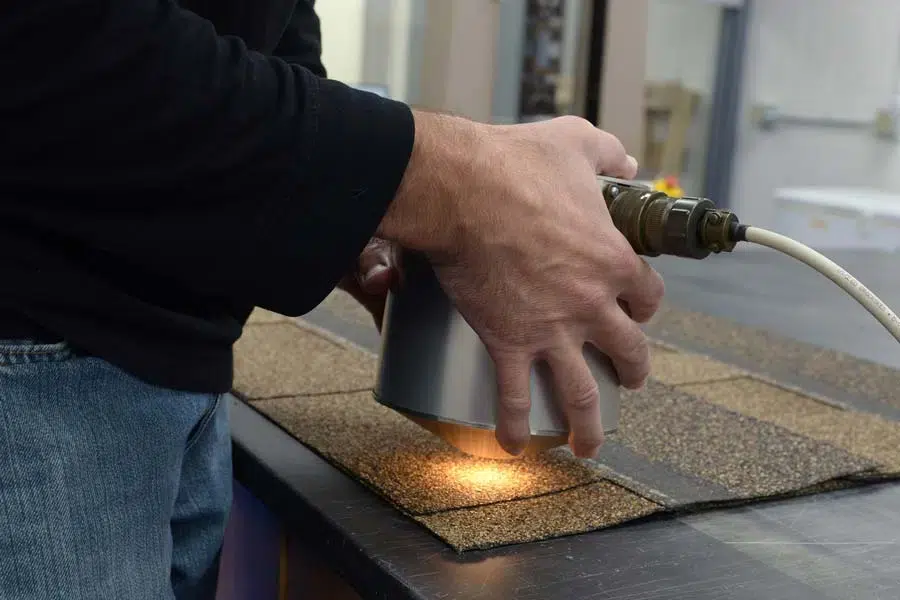
At its core, CRRC testing measures how effectively a roofing product reflects solar energy and releases absorbed heat. These characteristics directly impact rooftop temperatures and building energy performance. Products that maintain higher levels of solar reflectance and thermal emittance can help reduce cooling loads, improve occupant comfort, and contribute to broader sustainability goals.
Our team routinely works with a wide range of roofing products seeking CRRC certification. Common submissions include single-ply membrane systems such as TPO, PVC, and EPDM, as well metal roofing systems, shingles, and roof coatings. Each product category presents unique testing considerations, making specialized roofing knowledge an important part of the certification process.
One of the most important metrics generated through CRRC testing is the Solar Reflectance Index (SRI). This value combines solar reflectance and thermal emittance measurements to provide a comprehensive picture of thermal performance. Designers frequently use SRI values when selecting roofing materials for energy-efficient buildings, making accurate testing essential for manufacturers seeking specification opportunities.
However, initial performance is only part of the story.
One of the most valuable aspects of the CRRC program is its emphasis on long-term durability. After initial testing is completed, product samples are exposed to natural weathering conditions for three years at designated exposure sites representing different climate conditions. Once weathering is complete, the products are tested again to determine how well they retain their original performance characteristics.
This process helps answer one of the most important questions in roofing: Will the product continue performing years after installation?
Manufacturers often invest heavily in product development to maximize reflectivity and thermal performance. Aged testing verifies whether those benefits remain intact over time. Products that maintain strong performance after prolonged environmental exposure provide greater confidence to specifiers, building owners, and regulatory agencies.
To help manufacturers bring products to market sooner, the CRRC program also allows the use of accelerated weathering data. These provisional ratings enable manufacturers to begin promoting qualifying products while long-term weathering studies continue. Once final aged-test results become available, those values replace the provisional ratings.
Throughout the testing process, manufacturers gain valuable insight into how their products perform under demanding conditions. Common challenges may include performance degradation, UV-related instability, formulation inconsistencies, contamination, or manufacturing variations that affect long-term reflectivity. Identifying these issues early can help manufacturers refine products before they reach the marketplace.
Beyond certification itself, CRRC testing supports broader business objectives. Verified cool roof performance can contribute to reduced building energy consumption, support sustainability initiatives, and help mitigate the urban heat island effect in densely developed areas. As building performance standards continue to evolve, independently validated roofing data becomes increasingly valuable.
Not all testing laboratories offer the same level of roofing expertise. At ACE Laboratories, we perform testing using approved methodologies, specialized instrumentation, and rigorous quality procedures required for accredited roofing evaluations. As an independent laboratory operating under ISO/IEC 17025 quality standards, we provide manufacturers with trusted, defensible results that support certification, specification, and product credibility.
For roofing manufacturers, CRRC compliance testing is more than a regulatory exercise. It is an opportunity to validate product performance, strengthen market position, and demonstrate long-term value to customers. At ACE Laboratories, we help manufacturers navigate that process with the technical expertise, testing capabilities, and data integrity needed to move products confidently from development to certification and into the marketplace.

ACE is an ISO/IEC 17025 Accredited Independent Laboratory
ANAB is an internationally recognized accrediting organization that assures technical expertise and global acceptance of ISO/IEC 17025 accredited laboratories’ test reports for the purposes of free trade and regulatory acceptance.